The Boy in the Box
 2026/07/05
For decades, America's Unknown Child had no name. In 2022, one was finally proposed.

There is a particular hush that falls over a reader who has just turned the last page of a case that was never solved. It is not the satisfaction of a mystery resolved but something more restless — the sense of a door left ajar in a house one no longer lives in. True crime, at its best, lives in that draft of cold air. It asks the oldest questions a person can ask about another person: what happened here, who did it, and why. This section gathers the stories, the science, and the long, uneasy history of punishment that together make up humanity’s attempt to answer them.
What follows is an orientation rather than a verdict — a map of the territory for readers drawn to the darker corners of the human record. The aim throughout is to treat the dead as people rather than plot points, to separate the documented from the merely repeated, and to point the curious toward deeper reading. Some of these stories are centuries old; some remain open files in working police departments. All of them reward the patient reader who prefers the archive to the rumor.
The appetite for real crime is not a modern invention, whatever the streaming era might suggest. Long before the podcast and the docuseries, the broadside ballad and the execution pamphlet did brisk business. In eighteenth-century London, printed accounts of trials at the Old Bailey were sold as popular reading, and crowds gathered for public hangings as a form of grim entertainment. The Victorians consumed sensational murder in their newspapers with an enthusiasm that would look familiar to anyone who has refreshed a case forum at two in the morning.
What changed was not the hunger but its delivery. The nineteenth century gave the genre its literary respectability: Thomas De Quincey’s essay treating murder as a dark aesthetic exercise, the rise of the detective in the hands of Poe and later Conan Doyle, and the penny dreadfuls that made crime a mass product. The twentieth century industrialized it further. Truman Capote’s In Cold Blood (1966) is often cited as the founding text of the modern narrative form, applying the tools of the novel to a real Kansas murder and inaugurating a debate about the ethics of the genre that has never fully closed.
Explanations for the fascination tend to cluster into a few honest possibilities, and most readers recognize more than one in themselves:
It is worth naming the discomfort that shadows all of this. When real suffering becomes entertainment, the line between witness and spectator can blur. The most thoughtful writing in the field keeps that tension visible rather than smoothing it away.
Certain crimes lodge themselves in the collective memory and will not be dislodged. They tend to share a few qualities: a victim rendered anonymous or a killer who never was, a fragment of evidence that seems to promise a solution just out of reach, and a period detail that fixes the story in amber. These are the cases that generations of investigators, amateur and professional, keep returning to.
In January 1947, the body of Elizabeth Short, a twenty-two-year-old woman, was discovered in a vacant lot in the Leimert Park neighborhood of Los Angeles. The case drew enormous press attention, and the nickname the newspapers gave her has largely eclipsed her name in popular memory — a fact worth pausing over, because the sensationalism that made the case famous also flattened a young woman into a headline. Despite one of the largest investigations in the city’s history and a long parade of confessions and theories, the killing has never been solved. The endurance of the case owes as much to the machinery of postwar tabloid culture as to the crime itself.
Between the late 1960s and early 1970s, a killer operating in Northern California claimed responsibility for a series of murders and taunted police and newspapers with letters, some containing ciphers. The confirmed victim count is smaller than the figure the writer boasted, and estimates of how many killings can reliably be attributed remain disputed. One of the cryptograms went unsolved for decades until a team of civilian codebreakers announced a solution in 2020; others remain unbroken, and the identity of the writer has never been established. The Zodiac endures precisely because it combines the unsolved murder with the unsolved puzzle — two open doors in one house.
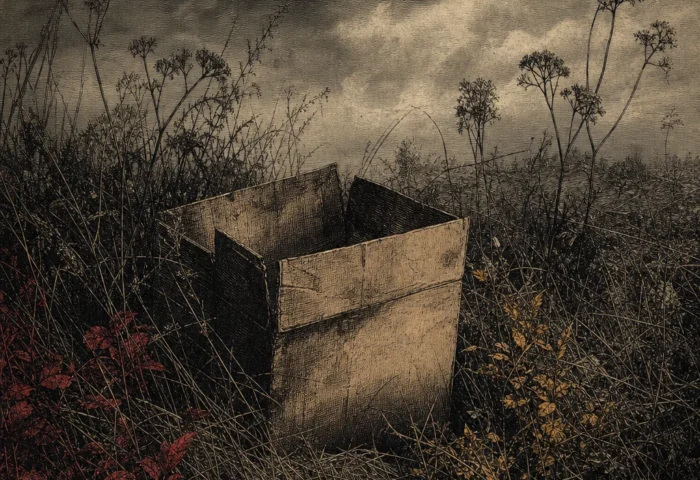
In 1957, the body of a young boy was found in a cardboard box in the Fox Chase area of Philadelphia. For more than six decades he was known only as “America’s Unknown Child,” and the case became one of the most poignant unidentified-remains files in the country, tended for years by investigators who refused to let it go cold. In 2022, Philadelphia police announced that the boy had at last been identified by name through genetic analysis, though the question of who was responsible for his death remains open. The story is a study in how a case can be partly resolved — a name restored — while its central injustice still awaits an answer. Readers can find a fuller account of it in the Boy in the Box file.
What unites these cases is not gore but absence: a missing name, a missing killer, a missing motive. They persist because the human mind abhors an unfinished story, and because, in each, someone real was lost. For related explorations of how the body itself becomes evidence and enigma, see Death & Disfigurement.
For most of history, the investigation of a crime relied on confession, eyewitness testimony, and inference — instruments notoriously prone to error. The transformation of detection into something resembling a science is a relatively recent achievement, and each of its milestones arrived amid skepticism before becoming indispensable.
The idea that the ridges on a fingertip are unique and permanent developed across the nineteenth century through the work of several figures. Henry Faulds and William Herschel published early observations on the use of fingerprints for identification, and Francis Galton produced influential statistical work on their individuality. A workable classification system — the kind that lets an investigator actually search a set of prints — was developed by Edward Henry with collaborators in colonial India, and variations of it were adopted by police forces around the world in the early twentieth century. Fingerprinting was among the first techniques to promise that physical evidence could speak where witnesses could not.
Among the more macabre and quietly brilliant disciplines is the study of insects to establish a timeline of death. Because certain insects colonize remains in a predictable succession, an entomologist can help estimate how long a body has been where it was found. The intellectual lineage reaches back centuries — a thirteenth-century Chinese text, the Xi Yuan Ji Lu, records an investigator using flies drawn to invisible traces of blood on a sickle to identify a killer — but the modern discipline took shape through nineteenth- and twentieth-century casework. It is a field that turns the ordinary revulsion of decay into precise, court-admissible testimony.
The most consequential revolution in modern forensics arrived with DNA. The technique of DNA profiling was developed by the geneticist Alec Jeffreys in the mid-1980s, and one of its earliest uses in a criminal investigation, in England, did something the public did not expect: it exonerated a man who had falsely confessed before it helped identify the actual offender. That double capacity — to convict and to clear — has defined the technology ever since, and has underwritten the work of innocence projects that have overturned wrongful convictions.
More recently, investigative genetic genealogy has extended DNA’s reach into decades-old files. By comparing crime-scene profiles against the family trees assembled from consumer ancestry databases, investigators can identify not a direct match but a relative, and work inward from there. The approach drew wide attention with the 2018 arrest of a suspect in a long series of California crimes, and it has since been credited with generating leads in numerous cold cases, including the identification in the Boy in the Box matter. It has also raised genuine and unresolved questions about privacy and consent that the field is still working through.
To read the history of crime honestly is to read the history of punishment alongside it, and here the popular imagination is often at its least reliable. The medieval past in particular has accumulated a thick crust of invented cruelty, much of it manufactured long after the fact for spectacle or profit.
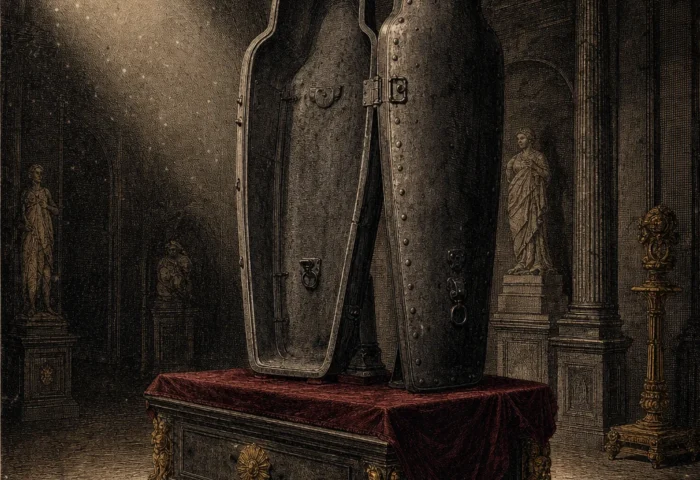
Consider the iron maiden, the upright spiked cabinet that features in countless illustrations of medieval torture. The historical evidence indicates that it is very largely a later fabrication. The famous example associated with Nuremberg appears to date from around the late eighteenth or nineteenth century — assembled, in effect, as an exhibit rather than an instrument — and historians have found no credible medieval record of such devices in actual use. The iron maiden is best understood not as a relic of the Middle Ages but as a relic of how a later age chose to imagine the Middle Ages: crueler, darker, and more theatrical than the documented record supports.
This matters beyond trivia. The mythology of spectacular torture flatters the present by making the past look uniquely barbaric, and it distracts from the punishments that were genuinely, routinely used — the pillory, branding, transportation, the gallows. The real history is grim enough without embellishment, and it is far more instructive.
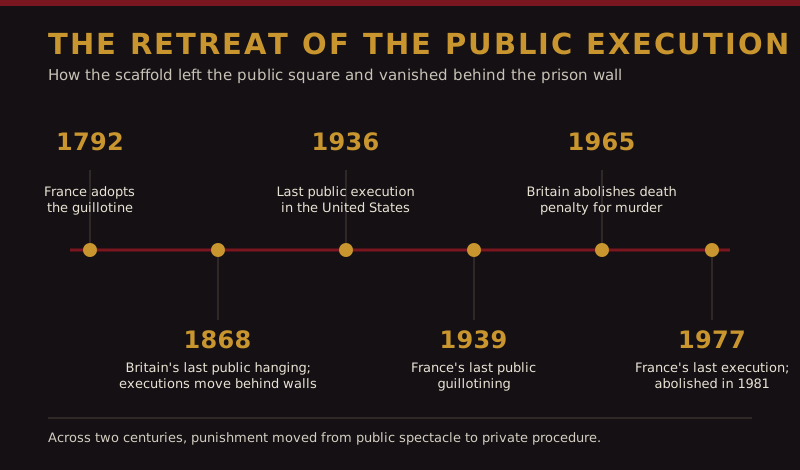
The broad arc of penal history in the West runs from punishment as public spectacle toward punishment as private confinement. The philosopher and historian Michel Foucault influentially traced this shift in Discipline and Punish, arguing that the disappearance of the public execution and the rise of the prison reflected a change in how power sought to control bodies and minds. One need not accept his every conclusion to notice the pattern: over roughly two centuries, the crowd around the scaffold gave way to the closed cell and the disciplinary timetable. Whether that constituted progress, or merely a quieter form of severity, is a question the reader is invited to sit with.
If the unsolved case is the genre’s great sorrow, the cracked cold case is its great consolation. The past decade has produced a steady stream of resolutions to crimes once thought permanently beyond reach, and nearly all of them share a common engine: evidence preserved for decades, meeting a technology that did not exist when the crime occurred.
The pattern is instructive. A profile developed from an old evidence sample — a technique impossible at the time of the original investigation — is run against genealogical databases; a distant relative surfaces; investigators build outward through public records until a name emerges; and a confirming sample closes the loop. What had been a folder in a basement becomes, suddenly, an arrest or an identification. In some instances the resolution comes too late for prosecution because the responsible party has died, and the outcome is a name and an acknowledgment rather than a trial. For families who have waited decades, even that partial resolution can matter enormously.
It would be a mistake, though, to treat the new science as infallible. DNA evidence can be contaminated, misinterpreted, or given more weight in a courtroom than it can bear; genealogical methods depend on databases whose users did not sign up to help solve crimes. The history of forensics is, in part, a history of techniques once presented as certain — bite-mark analysis and certain forms of pattern matching among them — that later scrutiny found wanting. The prudent reader holds the promise of the science and its limits in the same hand.
A magazine that dwells in these subjects owes its readers a word about how to read them. The material rewards curiosity, but curiosity untempered by care can curdle into something less admirable. A few habits distinguish the thoughtful reader of true crime from the merely hungry one.
Prefer the documented to the dramatic. The most repeated version of a story is not always the most accurate one, and the internet has a way of laundering speculation into fact through sheer repetition. When a detail is genuinely uncertain, the honest account says so. Remember the victims by name where their names are known, and resist the tidy narratives that turn a real person into an archetype. And hold space for the possibility that some stories will never be resolved — that the door will remain ajar, and the draft of cold air will keep coming.
For readers whose interests run adjacent to these files, the wider magazine offers several companion paths. Those drawn to the stranger residue of these cases — the coincidences, the unexplained testimony, the folklore that grows around unsolved deaths — may find kindred material in Paranormal Anomalies. Those who prefer the physical and medical dimension of mortality can turn to Death & Disfigurement. And for the miscellany of the morbid and the marvelous that does not fit neatly anywhere else, there is always the Cabinet of Curiosities, where individual case files and oddments are kept for the browsing reader.
What ties all of it together is a single conviction: that the darkest human stories are worth telling carefully, because the people in them deserve nothing less, and because we understand ourselves partly through what we are capable of and what we do about it afterward. The files below are open. Read them slowly.
Several factors compound over time. Older cases were investigated before modern forensic methods existed, and physical evidence was sometimes lost, degraded, or never collected in a usable way. Witness memories fade and witnesses die. Intense press coverage can also flood an investigation with false leads and confessions. A case endures in the public mind not necessarily because it was the most heinous, but often because it combined an unidentified victim or killer with a tantalizing fragment of evidence that seems to promise a solution just out of reach.
DNA profiling is among the most powerful tools forensic science has produced, and it has both convicted the guilty and exonerated the wrongly accused. That said, it is not magic. Samples can be contaminated or degraded, statistical results can be misrepresented in court, and the interpretation of complex mixtures is genuinely difficult. It is strongest as one piece of a larger evidentiary picture rather than as a standalone verdict. The most careful investigators and courts treat it accordingly.
Almost certainly not, according to the available historical evidence. The famous surviving examples appear to date from the eighteenth or nineteenth century, and historians have found no credible medieval records of such devices in genuine use. The iron maiden is best understood as a later invention — an artifact of how a subsequent age chose to imagine medieval cruelty rather than a real instrument of it. Plenty of harsh punishments were documented in that era, but this was not among them.
It is a technique that combines DNA analysis with traditional family-tree research. Rather than seeking a direct database match to a suspect, investigators compare a crime-scene profile against genealogical databases to find relatives, then work through public records and family history to narrow toward a specific person, whose identity is then confirmed with a direct sample. It has generated leads in numerous long-dormant cases since drawing wide public attention in 2018, though it also raises real, unresolved questions about privacy and consent.
The fascination itself is old and widely shared, and there is nothing inherently wrong with it. What matters is how one engages. Reading that centers the victims as people, prefers documented facts to lurid speculation, and keeps sight of the real harm involved is very different from consuming suffering purely as spectacle. The discomfort many readers feel is worth keeping rather than suppressing; it is a reminder that these are not stories invented for entertainment, even when they are told well.
2026/07/05
For decades, America's Unknown Child had no name. In 2022, one was finally proposed.
 2026/07/02
The spiked cabinet that fills museum gift shops has almost no basis in the medieval record. Its origins are far more recent,…
 2026/06/24
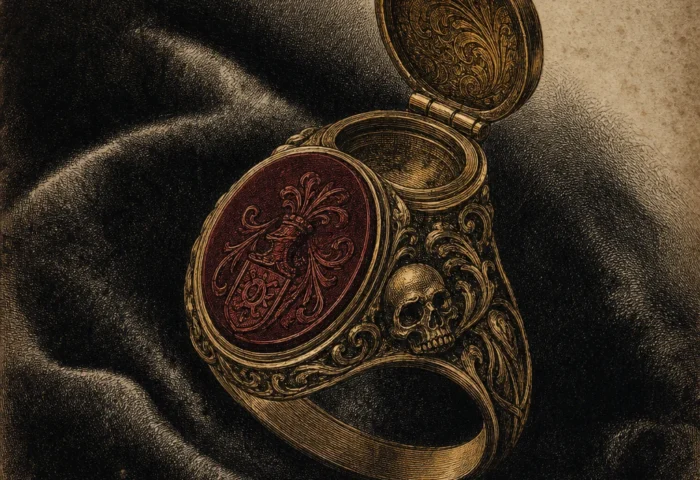
A ring with a hidden chamber, designed to slip a dose into a drink unseen.