The Victorian Poison Ring
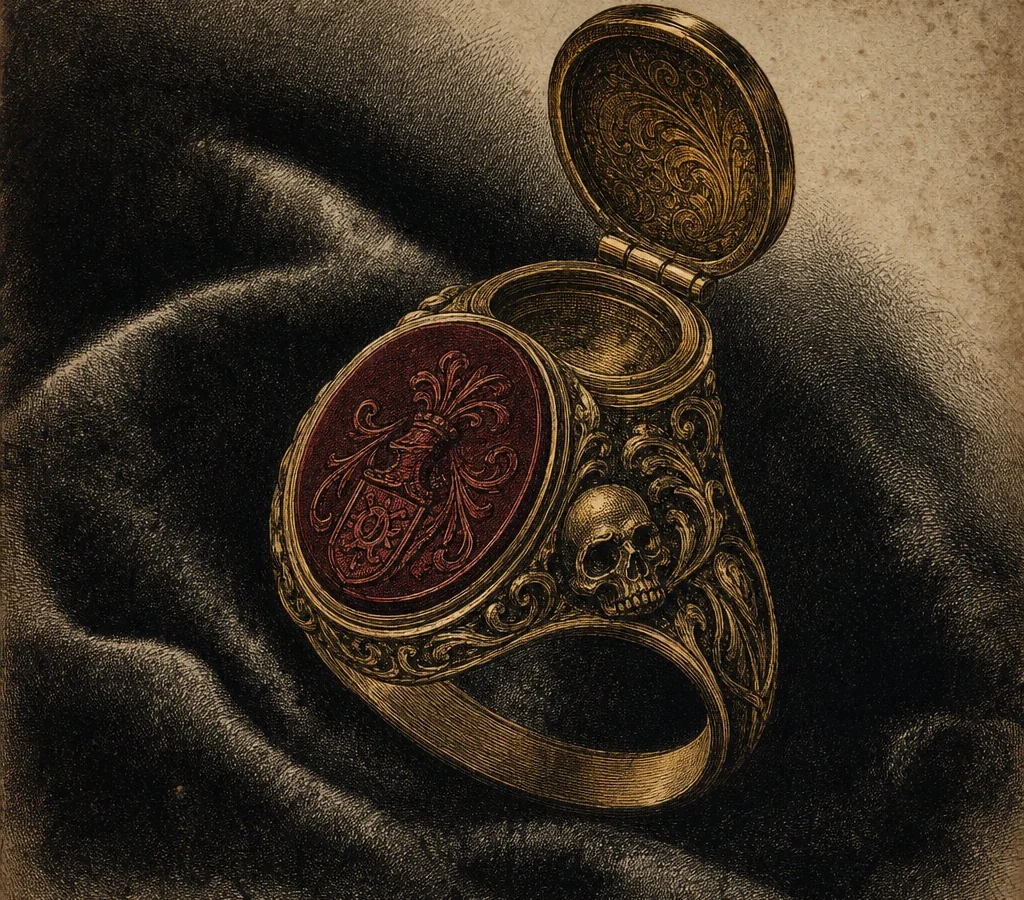
A poison ring looks, at a glance, like any other piece of jewellery, and that is exactly the point. Beneath a hinged bezel or a false stone lies a tiny hollow compartment, no larger than a fingernail, closed with a catch so fine that a casual eye would never find it. Whatever it held, the wearer carried close and unseen.
Rings of this kind appear across a long span of European history, from antiquity through the Renaissance and into the nineteenth century. The imagination has always assumed the worst of them. The compartment, the story goes, held a lethal powder to be tipped into an enemy’s wine, or a last measured dose for the wearer who preferred death to capture. The Borgias of Renaissance Italy became so bound up with such tales that the poison ring is half legend before it is ever an object.
The everyday reality was gentler and various. The same hidden cavity might carry perfume against the stench of a city street, a pinch of snuff, a devotional relic, a lock of a dead child’s hair, or a keepsake meant for no eyes but the wearer’s own. In the Victorian era, when mourning and sentiment were worn openly on the hand, the secret compartment was more often a locket than a weapon.
How many were ever truly used to kill is a question the record cannot answer. Documented poisonings by ring are vanishingly rare and hard to verify; the sinister reputation runs far ahead of the evidence. Historians continue to debate whether most such rings were instruments of murder, of memory, or simply of the delicious frisson of the idea.
Provenance: European, from antiquity through the nineteenth century; surviving examples are held in decorative-arts and jewellery collections.