The Barber-Surgeon’s Lancet
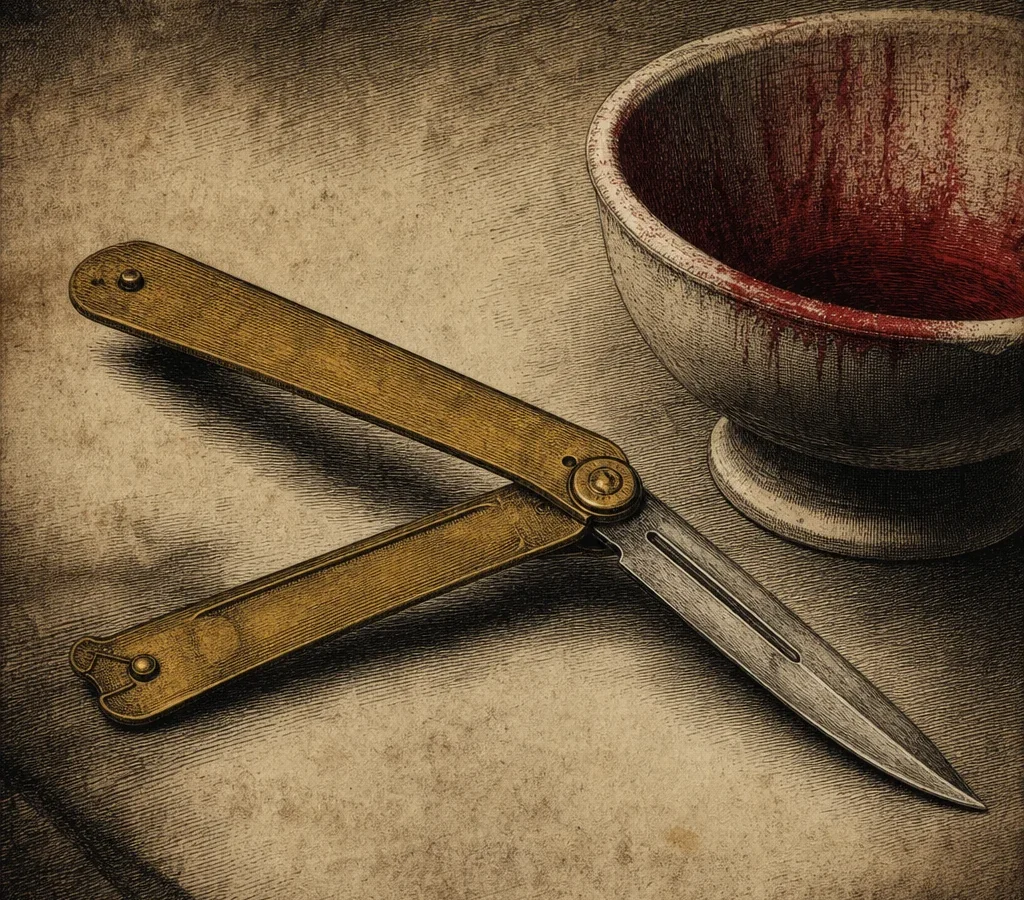
The red-and-white pole that still turns outside a barber’s shop is one of the last relics of a vanished and bloody trade. For centuries the man who cut your hair also opened your veins. The barber-surgeon shaved beards, drew teeth, lanced boils and let blood, all with the same steady hand, and the striped pole advertised the whole of that work: red for blood, white for the bandage, the pole itself the staff a patient gripped to make the vein stand proud.
The arrangement had a churchly origin. When medieval clergy, who had done much of the era’s practical medicine, were forbidden by decree from shedding blood, the work fell to the barbers, who already kept sharp blades and a firm grip. From that division grew guilds and companies of barber-surgeons that governed the trade for generations before the surgeons at last drew apart into a profession of their own.
The instrument at the heart of it was the lancet, a small, keen, folding blade, sometimes called a fleam, made to nick a vein cleanly and let the blood run into a waiting basin. Bloodletting was no fringe practice but the mainstream medicine of its age, prescribed for fevers, inflammations and a hundred other complaints on the old theory that health lay in the balance of the body’s humours.
Faith in the lancet outlasted all reason for it. The practice remained routine well into the nineteenth century, and more than one eminent patient was bled toward the grave by physicians certain they were doing good. The cheerful striped pole remembers a medicine that meant well and, often enough, did harm.
Provenance: European, from the medieval barber-surgeon guilds through the nineteenth century; the striped pole survives as the trade’s last emblem.